
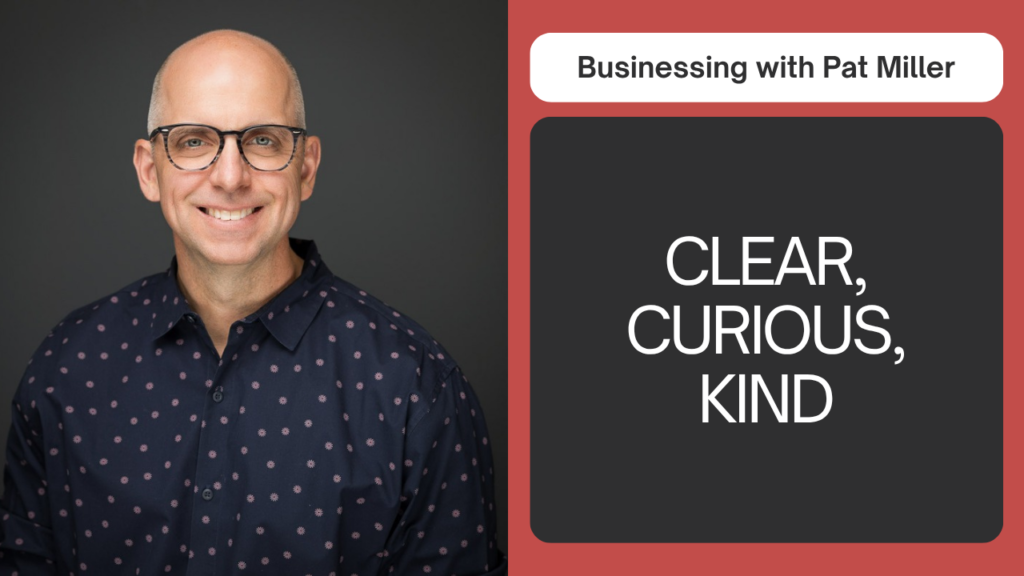
At a networking event, say who you help, what you do for them, and what they get out of it, then ask the other person a question. That is the whole move. Be clear, be curious, and be kind, and you walk out of that room with people who remember you and a reason to follow up.
Some of you are outdoor cats. You love walking into a room full of strangers, shaking hands and meeting new people, and you have never needed a strategy for any of it. The rest of us need a plan. I need one myself sometimes, because I get nervous I will say the wrong thing or end up stuck in a conversation I did not want. Three words fix that.
What does it mean to be clear at a networking event?
Being clear means you can answer “what do you do” in one sentence. I do this thing, for these people, in this way. That is it. The mistake almost everybody makes is drowning the other person in every service they have ever sold.
Here is the version that loses people. “I have a full-service marketing agency for blue-collar professionals, and I handle their Google ads, and I handle their newsletters, I do their social media, I also make them cookies, and I walk their dogs.” By the end of that, the other person is already working out how to leave.
Here is the version that works. “I help blue-collar businesses get more clients through great marketing. What do you do?” Now they know who you serve and what happens when somebody hires you, and you handed the conversation right back to them.
Think of it as a Post-It note stuck to your chest. That person is going to talk to eleventy billion people in ninety minutes. They may not remember your name. They can remember “blue-collar marketing person,” and that is a win.
How do you keep a networking conversation going?
You get curious, and the way I do it is a game I call networking tennis. Anytime somebody asks me a question, I answer it and then I lob one right back over the net.
It sounds like this. “What am I up to? I have got my conference this week and I am really excited about it, 125 small business owners, our sixth annual. Do you ever host events? What do you do?” They hit one back, I hit one back, and now we are having a conversation instead of taking turns monologuing.
Two reasons it works. People like to talk about themselves, so you are giving them exactly what they want. And your real job in that room is to learn enough about the other person to know whether there is a relationship here worth building. You cannot learn that while you are the one talking.
You have been on the other side of this. The person who will not stop. I have done speed networking where I had four minutes and never got a word in. Do not be that guy.
Why does being kind matter more than being right?
When in doubt, be kind about everything. The cookies are great. The speaker was brilliant. The room is not 41 degrees, it is refreshing. That is not fake, you are just declining to hand anybody a reason to walk away thinking you are a drag.
Nobody wants a relationship with someone who is negative. Some people complain because they think it makes them sound smart and discerning. It does not. It makes them sound like a jerk.
There is a practical reason too. You have no idea who is connected to who. You critique the speaker, and it turns out the person you are talking to is in that speaker’s mastermind group, or the speaker is their client. Now you are stapled as the jerk of the room, and the worst part is that nobody will ever tell you. You mention the beer was warm to a friend of the person who organized the whole thing, and that gets around fast.
What if walking into a room of strangers makes you nervous?
Then you are normal, and the three words are your script. Clear gets you through the opening. Curious gets you through the middle. Kind keeps you out of trouble. You are not performing, you are running a play you decided on before you walked in the door.
Look at networking objectively and it stops being mysterious. You are meeting people you do not know and building a relationship just long enough that they walk away thinking “that person seems okay, and I might be willing to do business with them.” Nobody in that room is asking for business tonight. You are trying to be worth a follow-up.
So here is the homework. Before your next event, write your one sentence. I do this thing, for these people, in this way. Say it out loud until it sounds like you and not like a brochure. Then go play networking tennis.
Questions owners ask
How do I introduce myself at a networking event?
One sentence covering who you help, what you do, and the outcome, then a question back. “I help blue-collar businesses get more clients through great marketing. What do you do?” Anything longer than that and you are asking a stranger to hold more information than they can carry.
What do I do if the other person will not stop talking?
Take the note and move on. A monologue tells you something useful about whether this is a relationship worth building, and you have other people to meet. Just make sure you are not the one doing it. If you have talked for three minutes without asking a question, you are that person.
What should I never say at a networking event?
Anything negative about the speaker, the food, the venue, or the organizer. You do not know who is connected to whom, and complaints travel faster than compliments. If you genuinely did not like something, say nothing about it.
Is networking worth it if nobody in the room is going to buy from me?
Yes, and that is the point. Most of the people you meet are never going to be your client. The people they already know might be. You are not there to sell tonight, you are there to make an impression good enough that your name comes up later.
Related
- How to Improve Your Networking Pitch
- From Wallflower to Lead Magnet: Networking for Introverted Entrepreneurs
- The Luck Surface Area Concept for Small Business Owners
This one came from the Businessing episode on Monday, September 14, 2026. You can watch the full episode here.
Full episode with transcript: What to Say at a Networking Event: Businessing, September 14, 2026
Businessing is the daily live show where small business owners figure out what to do next. Hosted by Pat Miller, founder of the Small Business Owners Community: owners only, nobody pitching, $9 a month.