
Contributed by SBOC Member:

Founder at Enji
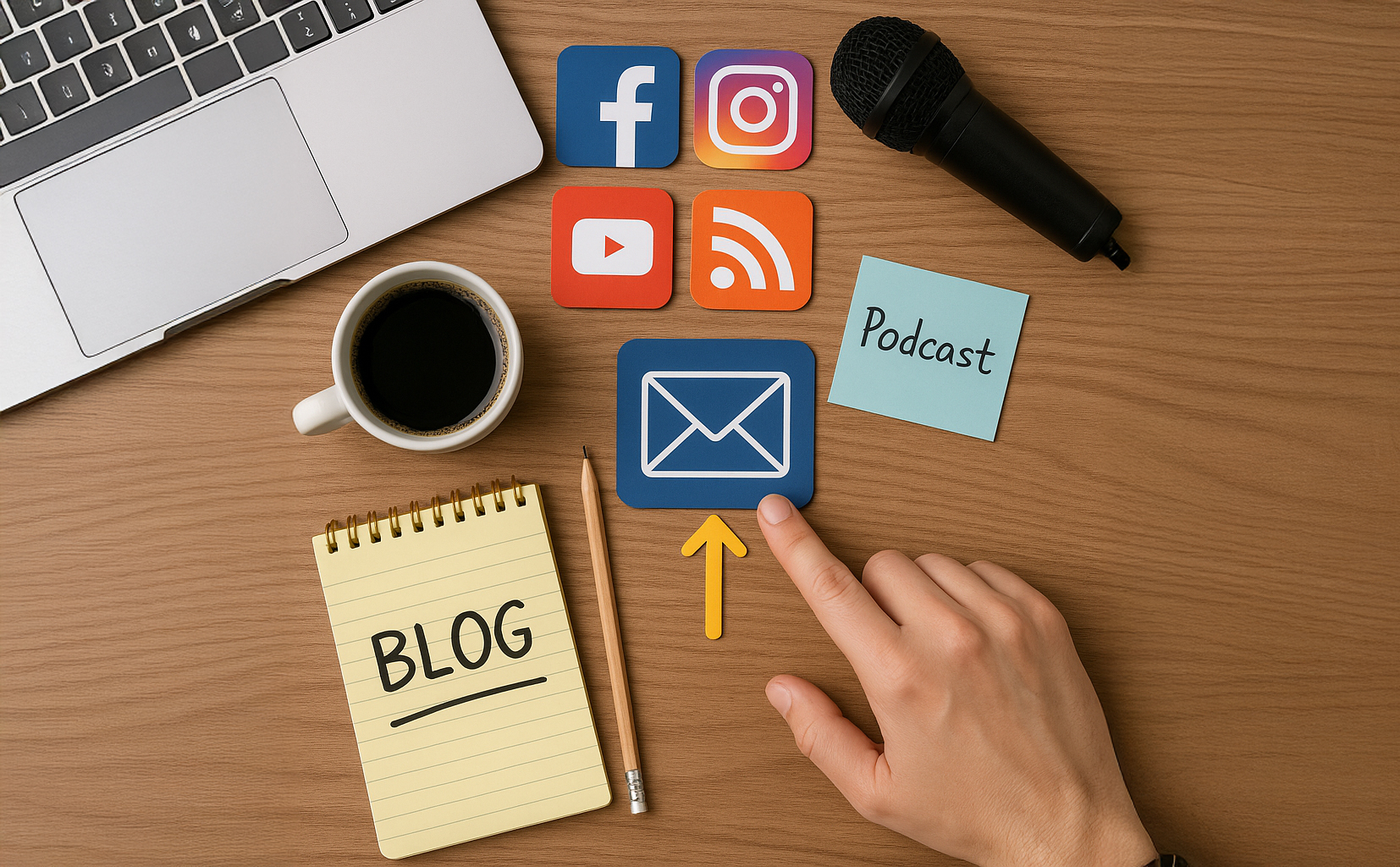
Should you be on Instagram? Is email marketing still a thing? What about podcasts, YouTube, or good old-fashioned blogging? The truth is, not every marketing channel is right for every business. And picking the “right ones” is about so much more than just being in the places you feel like everyone else is showing up—it’s about knowing you’re who you’re trying to get your small business in front of , your personal strengths, and the resources you have to spend (read: time and money). So let’s break down how to figure out what marketing channels make the most sense for your small business!
Before you even think about hashtags you should use or what hook you’re going to record, you need to make sure you’re doing your marketing in the places your ideal customers and clients even are! Because (as I like to explain it), marketing is the stuff you do to make sure people know you exist. But trying to make your ideal customers know you exist in a place they are not? That’s why you end up feeling like you’re screaming into a void.
So step one in making sure you’ve picked the “right” marketing channels for your small business is to ask yourself (and do some research) to know that your people are actually using that marketing channel. Think about it:
The marketing channels your ideal customers use should be the ones you market your small business on. For example, if your business caters to professionals or B2B clients, LinkedIn might be your goldmine. If you’re selling boho home decor to millennials, Pinterest could be your sweet spot. The key is put yourself in their shoes—don’t waste your time, energy, and money in places your people straight up ignore. Go where they’re already hanging out..
The next thing is to think about how much money you are asking of people and what the commitment is because not all marketing channels work equally well for every price point. Here’s an example (albeit extreme…I’m trying to drive a point home here), would you buy a house directly off an ad you saw on Instagram? Like see the ad. Click the ad. Land on a website. And add to cart? Pretty sure that’s a hard no.
The marketing channels that are going to work best for you also take the amount of convincing someone needs into consideration. Because if you’re selling high-ticket items or services, your customers will likely need more information, time to look at options, and reassurance before making a purchase. So in this case, marketing channels that allow for longer-form content (like email marketing, webinars, or detailed blog posts) can help you build trust and nurture leads. On the flip side, if you’re selling a $15 impulse-buy product, quick-hit platforms like Pinterest, Instagram or Facebook ads can be incredibly effective for driving fast sales.
In the end, you want to think about how much education and relationship-building your product or service requires and choose your channels accordingly.
You’ve heard this a bazillion times and know it in your bones: as a small business owner, you’re wearing a dozen hats already. Which means you’re tired. Which means things you don’t particularly enjoy doing won’t get done.
That’s why if you’re doing your own marketing, it’s important to lean into what you enjoy and what you’re good at—because then it has a shot at getting done. Hate being on camera? Skip YouTube or TikTok and focus on email marketing or even podcasting if you’re more comfortable behind a mic. Love writing (or have a trusty AI copywriter like Enji’s in your corner)? Content marketing and blogging could be your jam. At the end of the day, when you like what you’re doing, you’ll stick with it—and consistency is the secret sauce to marketing success.
This is where I have to remind you, “Your eyes are bigger than your stomach.” (As my dad used to say to me as a kid piling my plate high with food I had no chance in hell of finishing.) Picking your marketing channels is the same.
Some marketing channels are quick and snappy. Others take the endurance of running a marathon. For example, social media posts and paid ads can be set up and managed fairly quickly, while building a loyal podcast audience or growing a YouTube channel takes serious time and ongoing effort. So before you commit to any one or mix of marketing channels, ask yourself how many hours you can realistically dedicate to them each week. If your calendar is already bursting at the seams, prioritize channels that offer maximum impact for minimum time investment. It’s better to do one or two things well than to spread yourself too thin. Trust me.
I can’t have a conversation about picking marketing channels without mentioning budget. Because having a budget means two things:
So if you have money to invest into your marketing or experiment on things with, that gives you wiggle room to add more (which I typically very much discourage from most small business owners from doing). But if you can spend $1,000 on ads every month? Go for it (with guidance). Or if you can hire a social media manager? Get it. Doing your marketing for $0 is the hardest way to do your marketing—but it’s also the boat a lot of folks are in.
Here’s a little tough love: you won’t get it perfect right out of the gate. The best marketing plans are built on experimentation. So even if you think about all these things and feel great about your choices, chances are something won’t work out. But you have to try—this is an important part of being a small business owner.
But as you try channels that seem like a good fit and set clear goals…you have to track your results to know what’s working and worth it. No making decisions based on vibes here! So track your results to see what’s working and what’s not. If something isn’t gaining traction after a fair shot, don’t be afraid to pivot. Marketing is a living, breathing process, and your best channels might surprise you.
Managing multiple marketing channels doesn’t have to be overwhelming. With the right marketing tools, you can schedule posts, generate content, track your results, and even develop a full-blown marketing plan without breaking a sweat. Enji’s suite of small business marketing tools (like the Social Media Scheduler, AI Copywriter, and Marketing Strategy Generator) are designed to help you plan, do, and review your marketing—even if you’re a team of one. So let technology take some of the load off your shoulders so you can focus on what you do best: running your business.
Choosing the right marketing channels for your small business isn’t about doing it all—it’s about doing what works for you, your audience, and your schedule. By focusing on where your customers are, considering your product’s price point, playing to your strengths, managing your time wisely, and using the right tools, you’ll build a marketing strategy that’s not only effective but also sustainable. Remember, you don’t have to be everywhere—just in the right places. Take a deep breath, pick your channels, and start connecting with your future customers today.
This is a guest post from our friends at Enji—software that helps small business owners plan, do, and review their marketing when they have to do it themselves.

Pat spent two decades in broadcasting management and hosting. After leaving the radio industry, he spent time consulting small businesses and realized the support system for entrepreneurs was broken. Where could you find help for improving small businesses and building real connections with other like-minded people. In June of 2020, the Idea Collective Small Business Community was born.